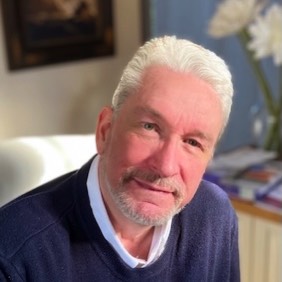
About Gary Redmond
I'm Gary Redmond, and for more than twenty-five years I have worked with people struggling with anger and the emotional and relationship difficulties that so often surround it. My professional background began in conventional counselling. I trained as a counsellor and was formerly an accredited member of the Irish Association for Counselling and Psychotherapy (IACP), the professional body for counselling and psychotherapy in Ireland. I also trained and qualified as a life coach and NLP Practitioner. Over the years, however, the way I worked gradually changed. This wasn't because I stopped valuing counselling or the many therapeutic approaches that help people. It happened because of what I repeatedly observed while sitting with clients and trying to understand why intelligent, caring people could find themselves behaving in ways they didn't understand and often deeply regretted. Those observations eventually led me to develop RIPP.
I Don't See an Angry Person
One of the most important things I've learned from working with anger for more than twenty-five years is that I don't think of someone as an angry person. I think of them as a person who has become conditioned into an angry response. That's an important distinction. People sometimes describe anger as though it were part of their identity: "That's just who I am." "My father was angry and his father was angry." "Everyone in my family has a temper." Anger can certainly travel through generations, but learned and conditioned behaviour can travel through generations too. When particular ways of reacting surround us as we grow up, they can become familiar, normal and eventually automatic. That doesn't mean we're destined to repeat them.
Looking Behind the Anger
As my work developed, I became increasingly interested in what was happening underneath anger. Why could someone know that their anger was damaging the relationship they valued most and still find themselves exploding? Why could someone promise themselves that they would never react that way again and genuinely mean it — only for the same response to take over the next time they were triggered? And why did so many people feel such profound remorse, regret and shame afterwards? Over the years, I've learned that anger seldom comes from a bad place at its core. Behind it I have encountered hurt, fear, betrayal, abandonment, rejection, injustice and powerlessness. Sometimes I've found love and loyalty too — people becoming angry because someone they love has been hurt, because they desperately want to protect someone, or because something that matters enormously to them feels threatened. None of this means that destructive behaviour should be excused. But if we want to change anger, I believe we first have to understand it.
The Development of RIPP
After many years of working with clients, I began recognising a recurring emotional process beneath many apparently different situations. I called it RIPP — Resistance, Injustice, Powerlessness and Pain. Something happens that we deeply resist. We experience it as wrong or unjust. We feel powerless to make it different. And beneath that struggle is emotional pain. For some people, that pain moves outward as anger. RIPP grew out of my counselling and coaching experience, but it is not conventional counselling and it is not another form of therapy. It is a psychoeducational method for helping people recognise a conditioned emotional process that can otherwise operate automatically. Rather than simply asking you to control the anger after it has appeared, I want to help you recognise what is happening before and underneath it. Once an unconscious pattern becomes visible, something changes. You have a choice that you didn't have when the response was operating automatically. These ideas are explored more fully in my book, The End of RIPP, and they form the foundation of the STOP RIPPing® Anger Management Programme.
How I Work Today
I work confidentially online with adults in the UK and internationally. My approach is personal, practical and nonjudgmental. When we meet, I'm not sitting there looking for what's wrong with you. I'm interested in understanding you — what has been happening, what triggers the anger, what matters to you and what appears to be happening beneath your reactions. We don't need to spend session after session endlessly revisiting your past. Your history can help us understand how a response developed, but our work is ultimately about recognising what happens now, at the point where the pattern begins to take over. And we start doing that from our first session together.
My Aim Is for You Not to Need Me
I don't believe in keeping people in sessions simply because they have started working with me. Sessions are pay as you go. There is no commitment to a predetermined number and you can stop whenever you feel you no longer need my help. That reflects something important about the way I have always approached this work. My aim is to make myself redundant to you. I want you to understand what is happening inside yourself well enough that you can recognise the pattern without me. Some people reach that point remarkably quickly. Others need more time. There is no correct number of sessions because there is no standard person sitting in front of me. Over the years, some former clients have kept in touch long after our work together has finished, occasionally letting me know how they are getting on. I always enjoy hearing from them. The work may be professional, but it is also human. You're not a case or an anger problem to me. You're a person I'm going to get to know and try my best to understand. And when you eventually don't need me anymore, we've achieved what we set out to do.
Book Your Initial Session
You don't need a preliminary consultation or a lengthy conversation about whether you should begin.
Your initial session is a full one-hour working session at
£150.
We'll begin with what's happening in your life, what you would like to change and what appears to be driving the pattern. We won't spend the hour discussing what we might do at some point in the future.
We'll get down to work from the beginning.After that session, you decide whether you would like another one. There is no obligation to continue and no predetermined number of sessions you have to complete.
I look forward to meeting you.